
Correct spring pairing
If your door uses two springs, they should be replaced as a matched pair so lifting force is even on both sides of the shaft.
Serving Casselberry, Florida & surrounding areas
If your door feels unusually heavy, won't open, or you can see a gap in the spring, stop using it and get a spring technician out. Casselberry Garage Door Repair replaces broken springs safely and gets your door balanced again.
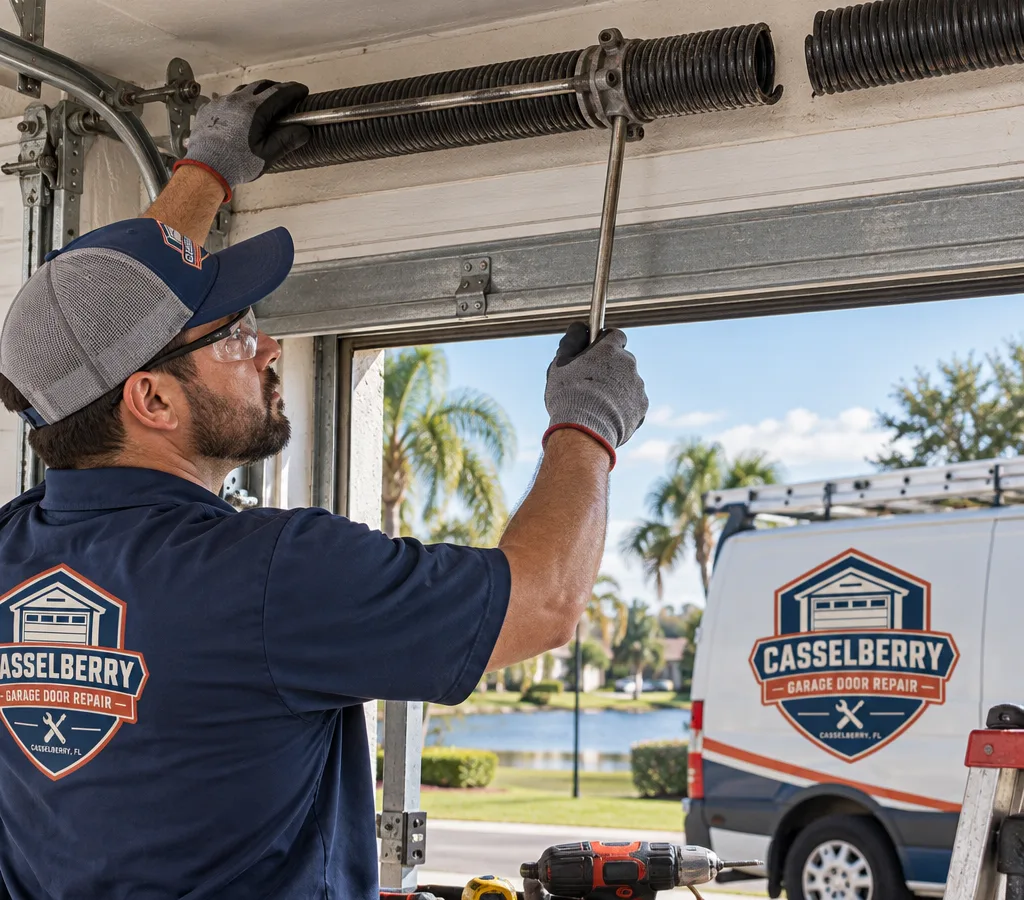
Most Casselberry spring calls start the same way: the opener hums but the door won't lift, the door rises a few inches and stops, or the door suddenly feels too heavy to lift by hand. With torsion systems, the spring or springs on a shaft above the door, the giveaway is often a visible gap in the coil. With extension systems, springs along the horizontal tracks, you may see a stretched, hanging spring or a safety cable that has gone slack.
A broken spring is not an opener problem. Springs carry the door's weight so the opener can move a balanced load. When the spring breaks, the opener is trying to lift a door that can weigh well over 100 pounds, and forcing it can burn out gears or bend hardware.
If you suspect a break, keep the door closed, don't pull the emergency release unless you have help controlling the door, and avoid trying to “muscle” it up. Casselberry Garage Door Repair focuses this visit on restoring safe lift: confirm the spring type, replace the correct spring or springs, set proper tension, and verify the door is balanced and the safety systems still work.
If you're comparing overall options beyond springs, garage door repair often starts with the same inspection because cables, drums, rollers, and bearings can be affected when a spring fails.
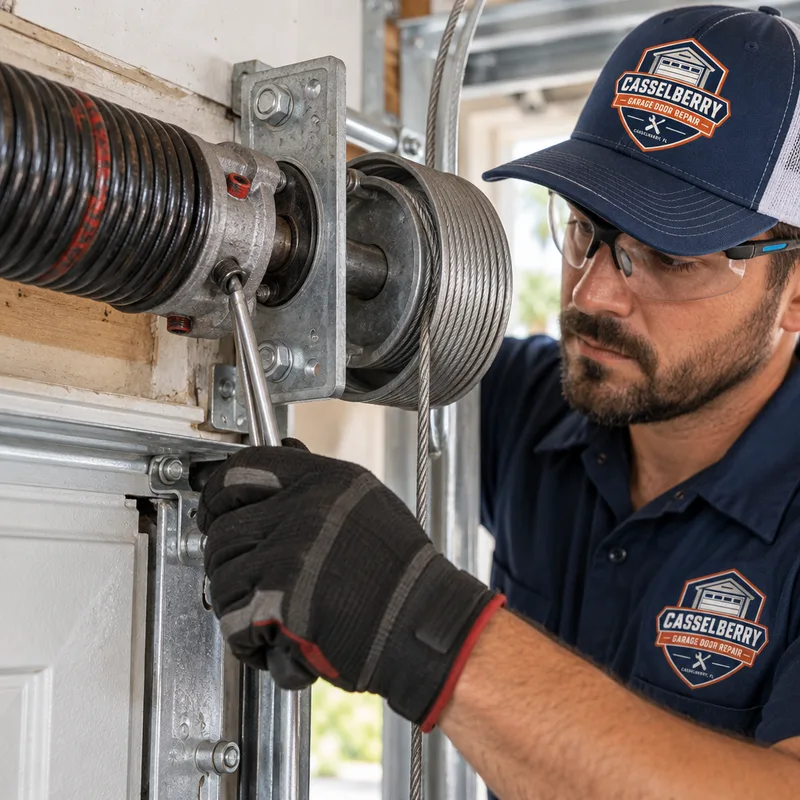
A spring swap is only safe when the whole lift system is matched and adjusted. During garage door spring replacement in Casselberry, we look at the things that determine whether the new spring will run smoothly or fail early:
In Casselberry's heat and humidity, metal hardware sees more corrosion and lubrication dries out faster. That does not automatically mean you need extra parts, but it does mean a careful inspection and proper lubrication are part of doing the job right.
If your door uses two springs, they should be replaced as a matched pair so lifting force is even on both sides of the shaft.
Springs are under extreme torque. We secure the door, control the shaft, and check fasteners, brackets, and bearing plates before tension is set.
We verify the door lifts smoothly by hand and holds position, which protects your opener and reduces strain on hinges and rollers.
After a break, cables can unwind or slip. We confirm the cable wraps evenly on the drums so the door stays level.
Once the door is balanced again, we confirm the opener is not over-forcing and that safety features function normally.
We identify whether the issue is a torsion or extension spring break, or another lift-system problem, and stabilize the door before any parts are loosened.
We size springs to the door, not the guess. Wire size, coil diameter, length, and wind direction matter, especially for heavier insulated doors.
With tension removed, we replace the spring or springs and check cables, drums, bearings, and shaft condition so the new springs are not fighting hidden friction.
We wind torsion springs, or tension extension springs, to achieve proper lift and then test balance by hand to confirm smooth travel.
We run the door through cycles, confirm travel is correct, and verify the system is operating safely before we leave.
Spring failures are rarely random. In Casselberry, we often see breaks tied to normal cycle wear, doors that are slightly out of alignment, or hardware that has started to bind.
CALL NOW: (407) 307-1796This is classic torsion spring failure. We confirm the break, then check cable tension because the door can drop and loosen a wrap.
A break can cause one side to lose tension first, or a cable can slip off a drum. This is handled as a level-and-reset issue, not just a spring swap.
If the door is not balanced, the opener is overloaded. We restore balance first, then confirm opener settings and operation.
If you're in a neighborhood with a lot of older doors or mixed hardware from past repairs, it's especially important to match the spring to the door's actual weight. A spring that is slightly wrong can make the door feel “fine” for a while but still put extra stress on the shaft, bearings, and opener.
It's possible on some doors, but it's not recommended because the door can be dangerously heavy and can drop fast. In Casselberry, many homes have automatic openers, and forcing the opener to lift a dead-weight door can damage the opener or pull hardware out of alignment.
If your door uses two springs on the torsion shaft, replacing both at the same time is usually the right move because the springs have similar wear and must lift evenly. Replacing only one can leave the door unevenly balanced and may lead to another failure soon after.
Yes. A visible separation in a torsion spring coil means the steel has snapped and the spring is no longer providing lift. The door may still move a little if the opener strains, but it is not operating safely.
Springs break from cycle wear, rust or corrosion on the coils, and extra load caused by a door that binds in the track or has worn bearings. In Central Florida, humidity can speed up corrosion, so proper lubrication and correct balance help reduce stress on the spring.
If the spring is broken, restoring spring tension and door balance often resolves the “hums and quits” symptom because the opener is no longer overloaded. If the opener still struggles after the door is balanced, we can help identify whether gears, capacitors, or settings are part of the issue.
If you suspect a broken spring, stop running the opener and schedule a spring inspection. Casselberry Garage Door Repair will confirm the cause, replace the correct spring(s), and leave the door balanced so it operates smoothly and safely.